JellyFil Official Website › Blog › What The Gummy Format Costs
Three Grams Of Sugar A Day: What The Gummy Format Costs You
Chewable supplements have taken over this aisle for one honest reason: people actually take them. That advantage is real and it is worth paying for. This is what it costs — in added sugar, in calories, and in how much active material a pectin sweet can physically carry.
Why gummies took over
Adherence. That is the whole answer and it is not a small one.
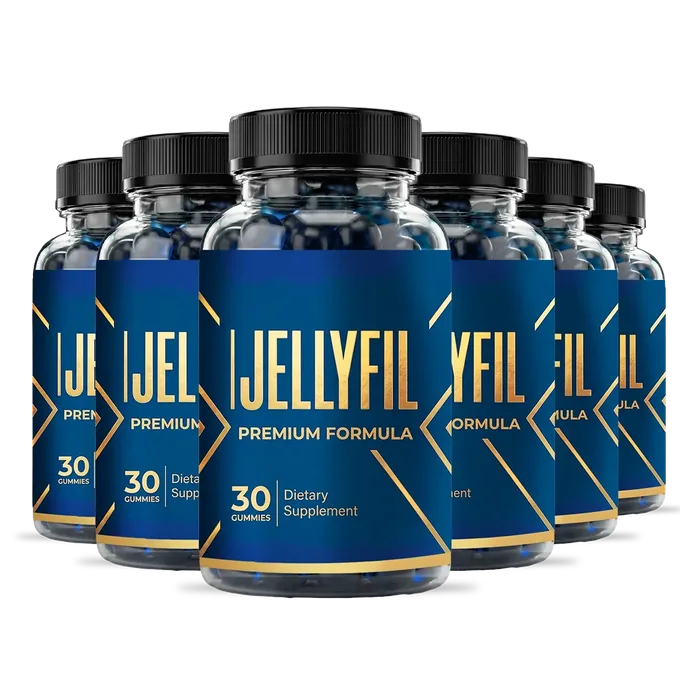
A supplement that is not taken does nothing at all, and the failure rate on capsule regimes is high enough that it dominates every other consideration. A chewable taken beside the coffee machine takes four seconds, needs no water, and tastes like a sweet. The JellyFil review file makes the point more clearly than any argument could: six of the eight entries in its roster carry the same line, word for word — “Daily habit stuck. Reordered before the last bottle.” — a sentence about the routine, not about an effect, and the summary lists the daily gummy as the thing buyers like.
That matters more than it sounds. Every dose figure in the next section assumes the dose was taken. A larger amount in a capsule that is abandoned in week two delivers less than a smaller amount in a gummy that is still being chewed in month three.
The ceiling a gummy cannot get past
Here is the cost, and it is a physical constraint rather than a decision by anybody.
A gummy is a pectin gel held together by sugars. That matrix has to set, has to stay chewable, and has to taste acceptable. Bitter botanical extracts fight all three, and the amount of active material you can load into a sweet before it becomes unpleasant is measured in tens of milligrams, not hundreds.
That is why the JellyFil panel carries an 82 mg blend rather than a gram of powder. It is not a formulator being mean. It is the format’s ceiling, and every gummy in this aisle is under it.
The usual mitigation, used here, is concentrated extracts: the panel annotates its 82 mg as equivalent to approximately 567 mg of dry powders. That helps, and it does not lift the ceiling to where a capsule sits.
- A capsule can hold several hundred milligrams of powder.
- A gummy holds tens of milligrams of extract plus the gel that carries it.
- Concentrated extracts narrow the gap and do not close it.
- The ashwagandha trial used 240 mg of a standardised extract of one ingredient. That would be three times this entire blend.
The sugar, in figures
Three grams of added sugar per gummy, all of it added, at six per cent of the Daily Value. Ten calories. Worth putting on a timescale, because a daily product is a daily product.
| Over | Added sugar from one gummy a day | For scale |
|---|---|---|
| A day | 3 g | 6% of the Daily Value |
| A month, one bottle | 90 g | About the sugar in two cans of cola |
| A six-bottle pack, 180 days | 540 g | Just over half a kilogram |
Arithmetic on the label’s own figure. Whether it matters depends entirely on the rest of a person’s diet.
For most people that is genuinely trivial: half a teaspoon a day, less than a biscuit. For two groups it is not. Anybody managing blood sugar closely should count it like any other sweet, and anybody who has deliberately cut added sugar to a target will find that a daily gummy eats into it.
It is also the reason a Supplement Facts panel is worth reading in full rather than skipping to the actives. The nutrition rows above the blend are not decoration; on a gummy they are the part of the label most likely to matter to somebody, and the labelling rules put them there first for that reason.
Order JellyFil from the desk that prints the whole panel
One chewable gummy a day, 30 to a bottle, nine ingredients on the printed label and a 60-day money-back window counted from the day you pay.
Price shown at the seller’s checkout · 60-day window from purchase
Order JellyFil From This CounterLot JEL-26/JE-4012 · a month in every bottle · dispatched inside the United States
Gummy against capsule, honestly
| A chewable gummy | A capsule | |
|---|---|---|
| Active material it can carry | Tens of milligrams, because the pectin and sugar matrix has to taste of something | Several hundred milligrams of powder |
| Added sugar | About 3 g per serving on this label | None |
| Calories | About 10 per serving | Negligible |
| Adherence | High. Four seconds, no water, tastes like a sweet | Lower. Capsule regimes are abandoned at a well-known rate |
| Heat tolerance | Poor. Pectin softens and gummies fuse | Good |
| Suitability | Apple pectin here, so vegetarian | Depends on the shell; gelatine is common |
Neither column is better. They are answers to different questions, and the question a buyer is answering is usually not the one the advertising assumes.
Reading that table as a scorecard misses the point. It is a list of trade-offs, and which side of each one you want depends on a question the advertising never asks: are you the sort of person who finishes a bottle?
If the answer is yes, and you want a known quantity of a single ingredient at the dose its research used, buy a capsule. If the answer is no — and for a great many people it honestly is — then the format that gets taken is worth more than the format with the bigger number on the panel.
Who should choose which
Choose a gummy if
- You have abandoned capsules before and know it.
- You want a daily habit attached to breakfast rather than a regime.
- You are vegetarian and the gel is pectin rather than gelatine, as it is here.
- Three grams of sugar a day is nothing to your diet.
Choose a capsule if
- You want a specific amount of a specific ingredient.
- You are counting added sugar to a target.
- You want to match a published trial dose rather than approach it.
- The bottle is going to live somewhere warm.
The NIH fact sheet and the NCCIH overview are both worth reading before choosing either, because the biggest single factor in whether any supplement does anything is whether the ingredient has evidence at all — and that question is settled long before the format is.
Two minutes with any gummy label
Everything above applies to the whole aisle, so here is the check in a form you can run on a shelf.
Turn the bottle round and read the nutrition rows before the actives. Calories, total carbohydrate, total sugar and how much of it is added. Those four lines tell you what the gummy costs you every day for as long as you take it, and they are the lines most buyers skip.
Then find the active total. Add up the milligram figures, or read the blend total if there is one. If the number is in the tens rather than the hundreds, that is the format ceiling rather than a defect, and it should be weighed against the dose the ingredient you care about was actually studied at.
Then check the gelling agent in the other-ingredients line. Pectin is plant-derived and vegetarian; gelatine is not. And finally read the storage instruction, because it is the one that decides whether a bottle survives a delivery in July.
- Nutrition rows first: calories, carbohydrate, sugar, added sugar.
- Then the active total, in milligrams, however it is presented.
- Then the gelling agent: pectin or gelatine.
- Then the storage temperature, and think about where the bottle will live.
- Only then read the front of the label, which is the part written to sell.
That sequence is deliberately backwards from the way a package is designed to be read, and it takes about two minutes. It is the same order this desk used when writing the JellyFil panel page.
The verdict this desk actually holds
JellyFil is a gummy, and this website sells it, so the incentive here is obvious and worth naming. With that said:
The format is the honest selling point. It is not a euphemism for a weak formula; it is a real advantage with a real cost, and both halves of that belong on the same page. The cost is three grams of sugar a day and a blend an order of magnitude below the trial doses. The advantage is that the bottle empties.
Somebody who wants disclosure and dose should buy a single-ingredient capsule and this desk would rather say so than take the sale. Somebody who has tried that twice and found both bottles half-full next spring is buying something different, and the 60-day window is there to find out whether it suits them.
The panel page transcribes every row including the nutrition figures quoted here, and the ingredients page sets each of the nine names beside the dose its own research used.
JellyFil is a dietary supplement, not a medicine, and nothing on this page treats or prevents any condition. Two of the nine ingredients on its panel act on the same pathway as nitrates, blood-pressure medicines and prescription PDE5 inhibitors, so anyone taking one of those should raise this gummy with whoever prescribes it before the first one. MedlinePlus carries the entry for the ingredient that matters most.
References
- U.S. Food and Drug Administration. Dietary supplement labeling guide: chapter IV, nutrition labeling, including proprietary blends. https://www.fda.gov/food/dietary-supplements-guidance-documents-regulatory-information/dietary-supplement-labeling-guide-chapter-iv-nutrition-labeling
- U.S. Food and Drug Administration. Spilling the beans: how much caffeine is too much? https://www.fda.gov/consumers/consumer-updates/spilling-beans-how-much-caffeine-too-much
- Lopresti AL, Smith SJ, Malvi H, Kodgule R. An investigation into the stress-relieving and pharmacological actions of an ashwagandha (Withania somnifera) extract: a randomized, double-blind, placebo-controlled study. Medicine (Baltimore). 2019 Sep. https://pubmed.ncbi.nlm.nih.gov/31517876/
- National Institutes of Health, Office of Dietary Supplements. Dietary supplements for exercise and athletic performance. Fact sheet for health professionals. https://ods.od.nih.gov/factsheets/ExerciseAndAthleticPerformance-HealthProfessional/
- National Center for Complementary and Integrative Health. Dietary and herbal supplements. https://www.nccih.nih.gov/health/dietary-and-herbal-supplements